Can You Bring a Power Bank on a Plane?
February 15, 2026
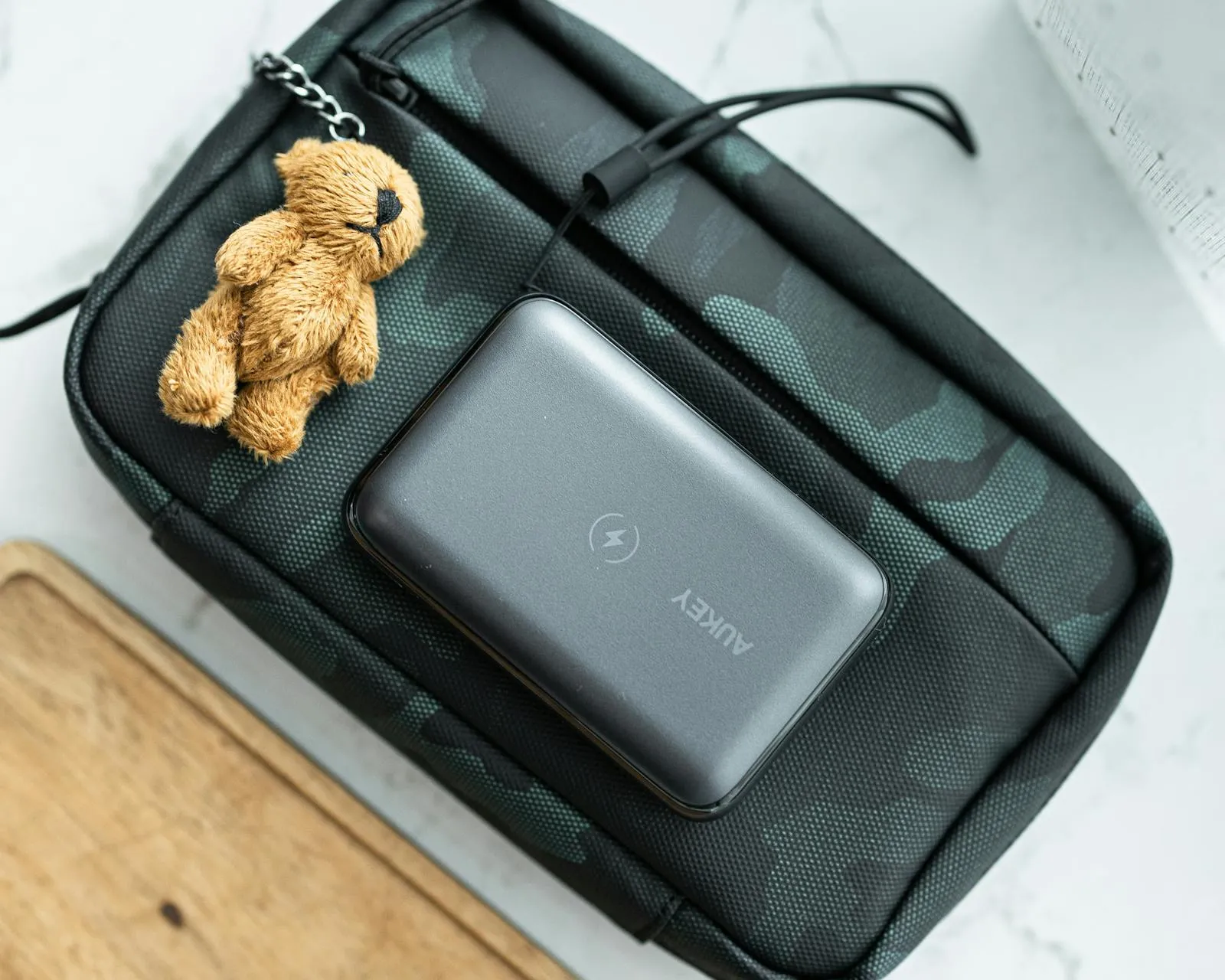
Yes, you can bring a power bank on a plane — but only in your carry-on bag, and only if it’s rated at 100 watt-hours (Wh) or less. Power banks are classified as spare lithium-ion batteries by both the TSA and FAA, which means they are strictly prohibited in checked luggage. Most standard power banks (up to about 27,000mAh) fall well under the 100Wh limit and require no special approval. Larger units between 100Wh and 160Wh need airline approval in advance, and anything above 160Wh is banned from commercial flights entirely.
Quick Answer
- Carry-on only. Power banks are never allowed in checked bags.
- Under 100Wh: Allowed without approval — covers most power banks up to ~27,000mAh.
- 100–160Wh: Allowed with airline pre-approval, maximum 2 per passenger.
- Over 160Wh: Prohibited on all commercial flights.
- No capacity label = possible confiscation. Make sure your power bank clearly shows its mAh or Wh rating.
Why Power Banks Can’t Go in Checked Luggage
The TSA and FAA prohibit spare lithium-ion batteries — including power banks — in checked baggage because of thermal runaway risk. Thermal runaway is a chain reaction where a lithium-ion cell overheats uncontrollably, potentially causing fire. In a cargo hold, there’s no one to detect or respond to a battery fire. In the cabin, flight crews are trained to handle these incidents immediately.
This isn’t a theoretical risk. Multiple in-flight incidents involving lithium batteries have prompted airlines to tighten rules, particularly from 2024 onward. An AirAsia power bank explosion mid-flight in 2024 accelerated regulatory changes across Asian and international carriers.
Important edge case: If your carry-on bag gets gate-checked (common on smaller aircraft), you must remove your power bank and any spare batteries before handing the bag over. Keep them on your person in the cabin.
Understanding the Watt-Hour Limit
Airlines regulate power banks by watt-hours (Wh), not milliampere-hours (mAh). Wh measures total energy capacity and is the standard the FAA uses to classify battery risk.
How to Calculate Wh from mAh
Most power banks list capacity in mAh. To convert:
Wh = (mAh × Voltage) / 1,000
Standard lithium-ion batteries operate at a nominal voltage of 3.7V. So:
| Power Bank Capacity | Voltage | Watt-Hours (Wh) | Airline Status |
|---|---|---|---|
| 5,000mAh | 3.7V | 18.5Wh | ✅ Allowed |
| 10,000mAh | 3.7V | 37Wh | ✅ Allowed |
| 20,000mAh | 3.7V | 74Wh | ✅ Allowed |
| 26,800mAh | 3.7V | 99.2Wh | ✅ Allowed (just under limit) |
| 27,000mAh | 3.7V | 99.9Wh | ✅ Allowed (borderline) |
| 30,000mAh | 3.7V | 111Wh | ⚠️ Requires airline approval |
| 50,000mAh | 3.7V | 185Wh | ❌ Prohibited |
The vast majority of consumer power banks — anything 26,800mAh or below — come in under 100Wh. This means most people will never need to think about pre-approval. Want to know how many charges you’ll actually get from these capacities? The math is straightforward once you factor in conversion efficiency.
What If the Label Is Missing?
If your power bank doesn’t clearly display its Wh or mAh rating, TSA agents may confiscate it. Before flying, check the label on the device body or look up the exact model’s specs online. Some manufacturers print specs only on the original packaging — that won’t help you at security.
TSA vs. FAA vs. Airline Rules: Who Controls What
Three layers of regulation apply to power banks on U.S. flights:
TSA handles security screening. Their rule is simple: power banks go in carry-on bags, not checked luggage. They may ask you to remove the power bank from your bag for separate screening, similar to a laptop.
FAA sets the capacity limits. Under 100Wh: no restrictions on quantity (for personal use). Between 100–160Wh: maximum 2 per passenger with airline approval. Above 160Wh: banned.
Individual airlines can impose additional restrictions on top of TSA/FAA rules. Here’s how some carriers differ as of 2025:
| Airline | In-Flight Use | Storage Rule | Quantity Limit |
|---|---|---|---|
| AirAsia | ❌ Prohibited | Seat pocket or under seat only | Standard (under 100Wh) |
| EVA Air | ❌ Prohibited | Carry-on, not overhead bin | Max 15 devices / 20 spare batteries under 100Wh |
| Air Busan (South Korea) | ❌ Charging banned | Carry-on only | Max 5 units at 100Wh each |
| Southwest Airlines | ✅ Allowed | Must be visible, not in overhead bin | Standard (under 100Wh) |
| Most U.S. / European carriers | ✅ Allowed (not during takeoff/landing) | Carry-on only | Standard (under 100Wh) |
Always check your specific airline’s battery policy before flying, especially for international routes. Rules are actively being updated.
How Many Power Banks Can You Bring?
| Capacity Tier | Quantity Limit | Approval Needed |
|---|---|---|
| Under 100Wh | No FAA limit (3–5 typical at airlines) | None |
| 100–160Wh | Max 2 per passenger | Yes — airline pre-approval required |
| Over 160Wh | 0 — prohibited | N/A |
The FAA’s “no limit” for under-100Wh units applies only to personal use. Batteries carried for resale or distribution are prohibited regardless of size.
Realistically, bringing 2–3 standard power banks (10,000–20,000mAh each) for a trip is perfectly fine and unlikely to raise any concerns. Not sure which size to get? I break down how many mAh you actually need based on your devices and travel habits.
Packing and Screening Tips
- Protect the terminals. Place power banks in a pouch, case, or cover the USB ports with tape to prevent short circuits.
- Keep it accessible. TSA may ask you to remove it from your bag, so don’t bury it at the bottom of your carry-on.
- Ensure a partial charge. TSA can request that you power on any electronic device. A dead power bank with no display response could theoretically be flagged.
- Don’t charge while sleeping. Most airlines discourage or prohibit unattended charging mid-flight.
- Turn it off during takeoff and landing. While not always legally mandated, most airlines request this as standard procedure.
International Flight Considerations
The IATA (International Air Transport Association) sets the global baseline that most countries follow: 100Wh without approval, 100–160Wh with approval, over 160Wh prohibited. However, some countries and carriers enforce stricter limits.
Asian airlines have been particularly aggressive with updated rules since 2025. If flying with carriers based in Southeast Asia, South Korea, or Taiwan, verify the latest policies directly on the airline’s website within a week of departure.
European airlines generally follow IATA/EASA standards without major deviations, but capacity labeling requirements may be stricter.
Common Mistakes
Packing a power bank in checked luggage. This is the most frequent issue. If caught during bag screening, the bag may be opened and the power bank removed — or the entire bag flagged and delayed.
Assuming mAh is what matters. Airlines care about Wh. A 30,000mAh power bank at 3.7V is 111Wh — over the limit. Always do the math.
Flying with an unmarked power bank. No visible capacity markings = potential confiscation at the discretion of the TSA agent.
Forgetting airline-specific rules. TSA/FAA compliance doesn’t automatically mean your airline allows it. Check both.
Frequently Asked Questions
Q: Is a 20,000mAh power bank allowed on flights? A: Yes. A 20,000mAh power bank at the standard 3.7V equals 74Wh, well under the 100Wh limit. No approval needed.
Q: Can I use my power bank to charge devices during the flight? A: On most U.S. and European airlines, yes — though typically not during takeoff and landing. Some Asian carriers (AirAsia, EVA Air) now prohibit in-flight power bank use entirely. Check your airline’s policy.
Q: Do power banks need to go in a clear plastic bag like liquids? A: No. Power banks don’t need to go in any specific bag. Just keep them in your carry-on and be ready to remove them for screening if asked.
Q: What happens if my power bank exceeds 160Wh? A: It will be confiscated. Power banks over 160Wh cannot travel on commercial aircraft under any circumstances — not even with approval.
Q: Can I bring a power bank on an international flight? A: Yes, the same general rules apply worldwide thanks to IATA standardization. Under 100Wh is fine in your carry-on. Between 100–160Wh needs airline approval. Individual airline and country rules may be stricter, so always verify before departure.
Summary
Power banks are allowed on planes in carry-on luggage only. Stay under 100Wh (roughly 27,000mAh at 3.7V) and you won’t need any special approval. Anything between 100–160Wh requires airline pre-approval, and above 160Wh is banned entirely. Always ensure your power bank has a visible capacity label, check your airline’s specific policy, and keep it accessible for security screening.
Need help choosing?
Take the quiz